Everyone Fights for Window and Aisle Seats — But the Middle Might Be Your Safest Bet
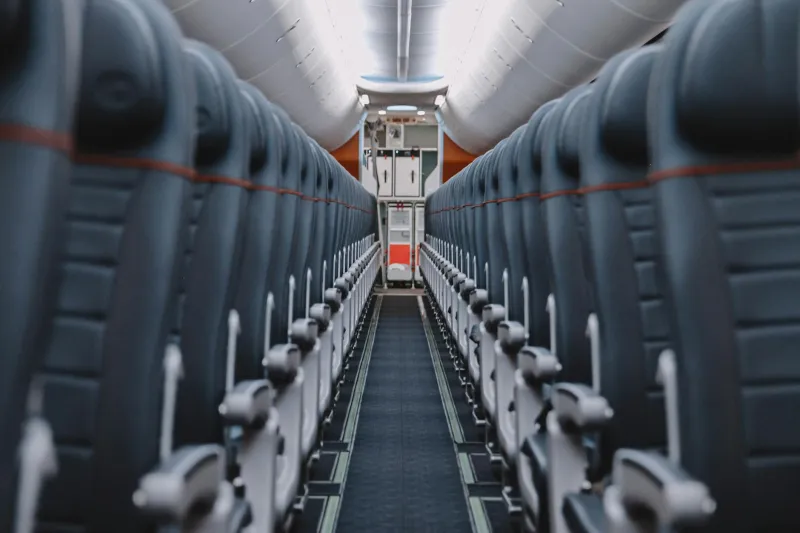
Everyone Fights for Window and Aisle Seats — But the Middle Might Be Your Safest Bet
Walk through any airport boarding area and you'll witness the same ritual: passengers desperately refreshing airline apps, hoping for an upgrade from that dreaded middle seat. The conventional wisdom seems obvious — window seats offer views and a wall to lean against, aisle seats provide easy bathroom access and extra legroom. The middle seat? That's where you get squeezed between strangers with nowhere to put your elbows.
But when it comes to actual safety, everything you think you know about airplane seating is more complicated than the comfort-focused narrative suggests.
The Data Airlines Don't Advertise
In 2015, TIME magazine analyzed 35 years of aircraft accident data from the National Transportation Safety Board, examining seating positions in crashes where passengers both survived and perished. The results challenged every assumption about "good" and "bad" seats.
Middle seats in the rear of the aircraft had the lowest fatality rate at 28%. Compare that to aisle seats in the middle third of the plane, which showed a 44% fatality rate — the highest of any seating configuration studied.
The findings were so counterintuitive that aviation safety experts had to explain why our instincts about airplane seating are essentially backwards when survival matters most.
Why the Middle Seat Wins When Things Go Wrong
The safety advantage of middle seats comes down to physics and protection. During impact, passengers in middle seats have human cushioning on both sides — a morbid but statistically significant factor in survival rates. Window passengers can be crushed against the fuselage, while aisle passengers face the risk of being thrown into the aisle or struck by loose cargo.
Dr. Mehran Mazari, an aerospace engineer who studies cabin safety, explains that the middle seat's position also provides better protection from debris. "In emergency situations, objects become projectiles. The middle seat passenger has the lowest probability of direct impact from flying debris or structural damage."
Rear seats consistently outperform front sections in crash survival statistics, regardless of position. The tail section experiences less severe impact forces during most accident scenarios, particularly the more common "controlled flight into terrain" incidents.
The Cabin Pressure Myth
One persistent belief is that certain seats experience different cabin pressure or air quality. This misconception likely stems from passengers noticing temperature variations throughout the cabin — the front tends to be cooler, the back warmer.
However, commercial aircraft maintain uniform cabin pressure throughout the passenger compartment. The Federal Aviation Administration requires pressurization systems to deliver consistent air quality from nose to tail. Any perceived differences come from proximity to air conditioning vents, not actual pressure variations.
"The aircraft is essentially one big pressure vessel," explains Captain Jennifer Morrison, a commercial pilot with 15 years of experience. "There's no seat that gives you a pressurization advantage. That's not how the physics work."
Emergency Exits: The Double-Edged Sword
Exit row seats command premium prices and are coveted for their extra legroom. Airlines market these seats as desirable, but the safety implications are more nuanced than the marketing suggests.
During rapid evacuations, exit row passengers have responsibilities that can delay their own escape. They must assess conditions outside, operate heavy doors, and assist other passengers before exiting themselves. In some emergency scenarios, exit row passengers have been among the last to leave the aircraft.
The "golden rule" of aircraft evacuation is that survival depends more on speed than seat selection. Passengers who hesitate, retrieve carry-on luggage, or wait for others consistently fare worse than those who move immediately toward any available exit.
Why We Get Seat Selection So Wrong
The disconnect between perceived and actual seat safety comes from our daily experience with transportation. In cars, front seats are generally safer thanks to airbags and crumple zones. On buses and trains, aisle access feels safer because it provides escape routes.
Aircraft operate under completely different physics. The forces involved in aviation accidents — sudden deceleration, structural failure, fire — create survival scenarios unlike anything we experience in ground transportation.
Airlines also contribute to the misconception by pricing seats based on comfort, not safety. Premium seat selection fees create a perceived hierarchy where expensive equals better, but safety statistics don't support this assumption.
The Real Factors That Matter
While seat selection makes headlines, aviation safety experts emphasize that other factors have far greater impact on survival odds:
Attention during safety demonstrations: Passengers who actively listen and locate their nearest exits (which may be behind them) have significantly better survival rates.
Appropriate clothing: High heels, synthetic fabrics, and loose jewelry create evacuation hazards that outweigh any seat selection advantage.
Carry-on behavior: Passengers who abandon luggage during emergencies survive at much higher rates than those who attempt to retrieve belongings.
The Takeaway
This doesn't mean you should suddenly start booking middle seats for your next vacation. Commercial aviation remains extraordinarily safe — your statistical chance of being in any aircraft accident is roughly 1 in 11 million.
But understanding the real safety data can reframe how you think about air travel. The seat selection anxiety that drives passengers to pay extra fees and refresh booking pages obsessively is largely focused on comfort factors that have little relationship to actual safety outcomes.
The next time you're stuck in a middle seat, remember: statistically speaking, you might have just won the safest spot on the plane. Even if your elbows don't have anywhere to go.