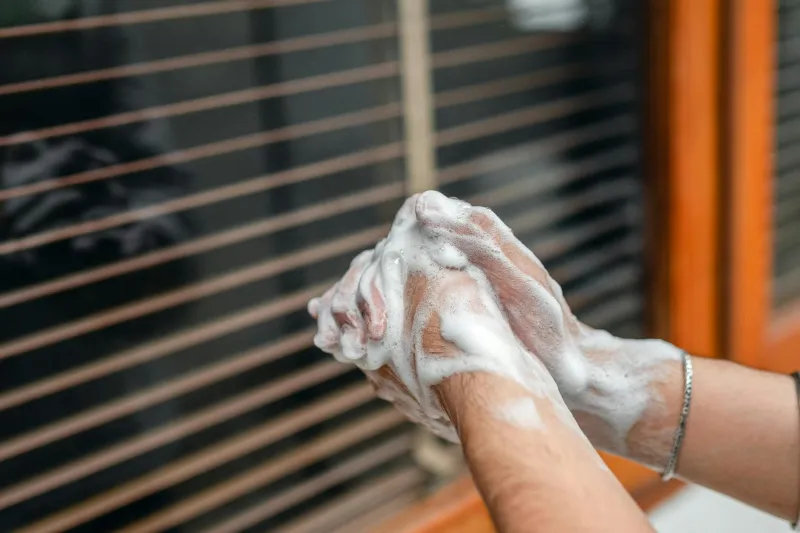
The Hand Washing Theater Most People Perform
Every American knows the drill: wet hands, apply soap, scrub for twenty seconds while humming "Happy Birthday" twice, rinse thoroughly. Public health campaigns have drilled this routine into our collective consciousness since elementary school.
But watch people actually wash their hands in any public restroom, and you'll see the same mistakes repeated endlessly. They focus obsessively on timing while completely missing the mechanical action that actually removes germs. They reach for antibacterial soap believing it offers superior protection, unaware that regular soap works just as effectively.
The hand washing advice everyone follows addresses the wrong problems entirely.
Why Your Expensive Antibacterial Soap Is Mostly Pointless
Walk down any grocery store aisle, and you'll find dozens of antibacterial hand soaps promising to "kill 99.9% of germs." Americans spend millions extra on these products, convinced they're buying superior protection against illness.
The FDA has repeatedly stated that antibacterial soap offers no meaningful advantage over regular soap for everyday hand washing. Both types work through the same basic mechanism: loosening the oils and debris that harbor bacteria and viruses, then washing everything away.
Antibacterial agents like triclosan might kill some microbes on contact, but proper hand washing removes them mechanically anyway. Meanwhile, these chemicals may contribute to antibiotic resistance and environmental pollution without providing the promised health benefits.
Regular soap — even the cheapest bar soap — accomplishes the same goal through simple chemistry and physics.
The Technique Everyone Gets Wrong
Timing gets all the attention, but technique determines effectiveness. Most people wet their hands, squirt soap into their palms, rub briefly, and rinse. They've technically followed the twenty-second rule while missing the crucial mechanical action that actually removes pathogens.
Effective hand washing requires friction across all hand surfaces. The soap needs to reach between fingers, under nails, around thumbs, and across wrists. Simply timing the process doesn't guarantee thorough coverage.
Healthcare workers learn specific techniques that ensure complete hand coverage. They interlace fingers, rotate thumbs, and scrub nail beds deliberately. These motions matter far more than singing any particular song twice.
The twenty-second guideline exists because most people need that much time to properly cover all hand surfaces — but only if they're using effective technique throughout.
What Actually Happens When You Wash Your Hands
Soap molecules have a unique structure: one end attracts water while the other end attracts oils and fats. When you scrub with soap, these molecules surround the oils on your skin where bacteria and viruses hide. The mechanical action of rubbing breaks apart this protective layer.
Rinsing then washes away the loosened debris, taking the trapped microbes with it. No special chemicals required — just basic chemistry and adequate scrubbing.
This process works against virtually all pathogens, including viruses like influenza and COVID-19 that have protective lipid envelopes. The soap dissolves these envelopes, destroying the virus structure.
Hot water feels more thorough, but temperature doesn't significantly impact effectiveness. Warm water helps soap lather and feels more comfortable, but cold water with proper technique works just as well.
The Forgotten Parts of Your Hands
Most people focus on palm-to-palm scrubbing while neglecting other surfaces. Thumbs get minimal attention despite constant use. The backs of hands receive cursory cleaning. Wrists remain completely ignored.
Fingertips and nail beds harbor significant bacterial loads but rarely receive adequate scrubbing. These areas come into contact with surfaces constantly yet get overlooked in typical hand washing routines.
Proper technique addresses every surface systematically. Healthcare protocols break hand washing into specific steps ensuring complete coverage, not just adequate timing.
When Hand Washing Actually Matters Most
Public health messaging emphasizes frequent hand washing, but strategic timing matters more than constant scrubbing. Washing after using restrooms and before eating prevents most transmission routes.
The period immediately after touching high-contact surfaces — door handles, shopping carts, elevator buttons — represents peak contamination risk. Hand washing during these windows provides maximum protection.
Obsessive hand washing can actually damage skin barriers, potentially increasing infection risk. The goal is effective removal of pathogens at key moments, not constant sterilization.
Why the Simple Truth Gets Complicated
The hand washing advice everyone knows developed through decades of public health campaigns trying to create memorable, actionable guidelines. "Twenty seconds" is easier to remember and measure than "adequate mechanical coverage of all hand surfaces."
Soap manufacturers benefit from confusion about antibacterial products. Premium pricing for specialized formulations generates higher profits than admitting regular soap works just as well.
Meanwhile, the actual science — mechanical removal through proper technique — gets lost in simplified messaging designed for mass consumption.
The Real Hand Washing Rules
Effective hand washing comes down to three principles: adequate soap, thorough coverage, and sufficient mechanical action. Time matters only insofar as it allows complete technique.
Focus on covering every surface of your hands with soap, then scrubbing systematically. The song you hum is irrelevant; the motions you make determine effectiveness.
Regular soap works perfectly well. Save money on fancy formulations and invest that attention in better technique instead.
Your hands will be cleaner, and you'll actually understand why the process works.