Flying Used to Be Like Taking a Bus — Then Airlines Discovered They Could Charge for Everything
The Golden Age Wasn't Just Marketing
Most travelers boarding a flight today assume the chaos has always been part of flying. The gate crowds fighting for overhead space, passengers hoarding armrests, and the general atmosphere of barely controlled panic — surely this is just what happens when you put hundreds of people in a metal tube at 30,000 feet, right?
Actually, no. Commercial aviation was once remarkably civilized, and the transformation into today's stress-inducing experience happened through deliberate choices, not inevitable evolution.
Before airline deregulation in 1978, flying operated more like a public utility. Ticket prices were standardized, routes were regulated, and airlines competed on service quality rather than rock-bottom fares. The result? A travel experience that resembled taking a comfortable bus more than surviving a gladiator arena.
When Overhead Bins Weren't War Zones
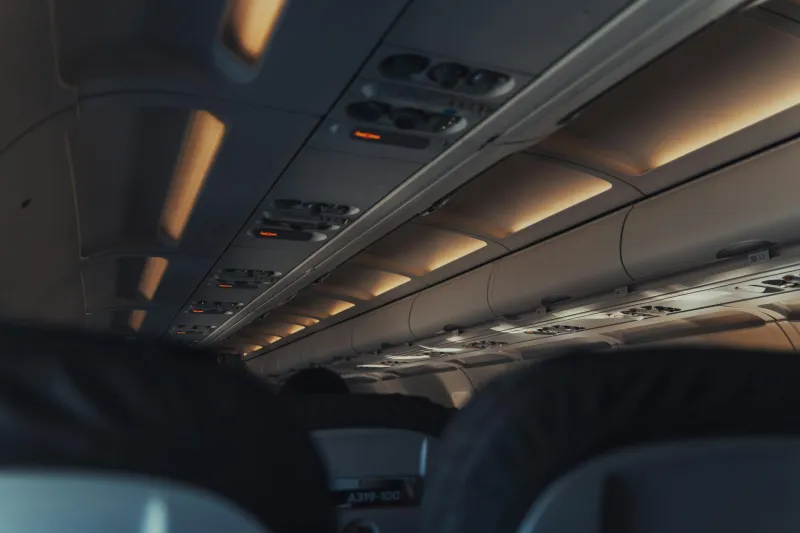
The overhead bin battle didn't exist because passengers didn't need to fight for space. Airlines included checked baggage in ticket prices, so most people simply checked their bags and boarded with minimal carry-ons. The overhead bins held coats and small personal items, not entire wardrobes crammed into regulation-sized suitcases.
This wasn't because people were more polite in the 1970s. It was because the economic incentives were completely different. When checking a bag cost nothing extra, rational travelers chose convenience over lugging heavy suitcases through airports.
The shift began in the late 1980s when airlines started charging for checked bags during financial downturns. What seemed like a temporary revenue boost became permanent policy, and suddenly every passenger had a financial incentive to stuff everything possible into a carry-on bag.
The Seat Pitch Revolution
Seat spacing, measured as "pitch" in airline terminology, tells the story of flying's transformation in cold numbers. In 1978, the average economy seat pitch was 34 inches. Today, it's closer to 30 inches, with some ultra-low-cost carriers squeezing it down to 28 inches.
This wasn't a gradual change driven by passenger preferences or technological limitations. Airlines discovered they could fit more seats in the same space by reducing legroom, and deregulation meant no government agency could stop them. The extra revenue from additional seats per flight outweighed passenger complaints.
The result is that reclining your seat — once a normal part of flying — became a source of conflict. When seats are spaced for maximum capacity rather than human comfort, one person's recline becomes another person's crushed laptop screen.
The Psychology of Artificial Scarcity
Modern airlines have mastered the art of creating artificial scarcity to generate revenue. Priority boarding, extra legroom seats, and preferred overhead bin access all cost extra because airlines deliberately made the standard experience less comfortable.
This strategy works because it exploits loss aversion — people's tendency to pay more to avoid losing something than to gain something equivalent. When airlines took away included amenities like seat selection and baggage, then offered to sell them back as "upgrades," passengers felt they were avoiding a loss rather than paying for a luxury.
The gate area chaos before boarding reflects this psychology in action. When only paying customers get priority boarding, everyone else clusters around the gate, afraid of missing out on overhead bin space or being forced to check bags at the last minute.
The Hub-and-Spoke Pressure Cooker
Deregulation also changed how airlines route flights, creating the hub-and-spoke system that concentrates passengers through major airports. This system is efficient for airlines but creates bottlenecks that amplify every source of travel stress.
Before deregulation, airlines operated more point-to-point routes, spreading passenger volume across more airports. The hub system concentrates thousands of travelers into the same terminals at the same times, creating the crowded, rushed atmosphere that defines modern air travel.
When your connecting flight leaves from the opposite end of a massive airport in 45 minutes, the relaxed pace of earlier air travel becomes impossible. The system itself creates urgency and stress.
The Real Cost of Cheap Tickets
Airline deregulation succeeded in making flying more affordable for more people. Adjusted for inflation, airline tickets cost significantly less today than they did in 1978. But this democratization of air travel came with hidden costs that weren't obvious at the time.
The civilized flying experience of the past was subsidized by higher ticket prices that fewer people could afford. When airlines competed on service rather than price, they invested in passenger comfort because that's how they differentiated themselves.
Today's race to the bottom on pricing means airlines cut every possible cost, and passenger comfort is usually the first casualty. The stress and chaos aren't accidental byproducts — they're the predictable result of prioritizing low fares above all other considerations.
Why This Matters Now
Understanding that today's flying experience was constructed, not inevitable, helps explain why passenger frustration feels so justified. The system really is less comfortable and more stressful than it used to be, and travelers aren't imagining the decline.
This history also suggests that change is possible. The current model isn't the only way to run airlines, and some carriers are experimenting with different approaches. But as long as most travelers prioritize the cheapest fare over the overall experience, airlines have little incentive to reverse course.
The overhead bin wars and gate area chaos aren't signs of human nature at its worst — they're rational responses to a system designed to extract maximum revenue from minimum comfort. Recognizing this doesn't make flying more pleasant, but it at least explains why something that should be routine has become such an ordeal.