Your Expired Sunscreen Probably Still Works — You're Just Using It Wrong
The Great Sunscreen Purge
Every spring, Americans perform the same ritual: digging through beach bags and medicine cabinets, checking dates on sunscreen bottles, and tossing anything past its expiration into the trash. It's a practice that feels responsible and safety-conscious, but it's based on a fundamental misunderstanding of what those dates actually mean.
Meanwhile, the same people carefully applying fresh, expensive sunscreen are making basic application errors that make their SPF ratings essentially meaningless. The result? Perfectly good products get wasted while preventable sunburns happen anyway.
What Expiration Dates Actually Measure
Sunscreen expiration dates aren't danger warnings — they're efficacy guarantees. The Food and Drug Administration requires manufacturers to prove their products maintain labeled SPF protection for at least three years, but that doesn't mean the protection vanishes the day after the printed date.
"Think of it like a warranty period," explains Dr. Rachel Nazarian, a dermatologist at Schweiger Dermatology Group in New York. "The manufacturer can only guarantee full potency until that date, but the actual protection degrades gradually over time."
 Photo: Schweiger Dermatology Group, via lh5.googleusercontent.com
Studies have found that sunscreen stored properly can retain 90% or more of its protective power for months or even years past its expiration date. The active ingredients — zinc oxide, titanium dioxide, avobenzone, and others — are chemically stable compounds that don't suddenly become useless.
The Real Sunburn Culprits
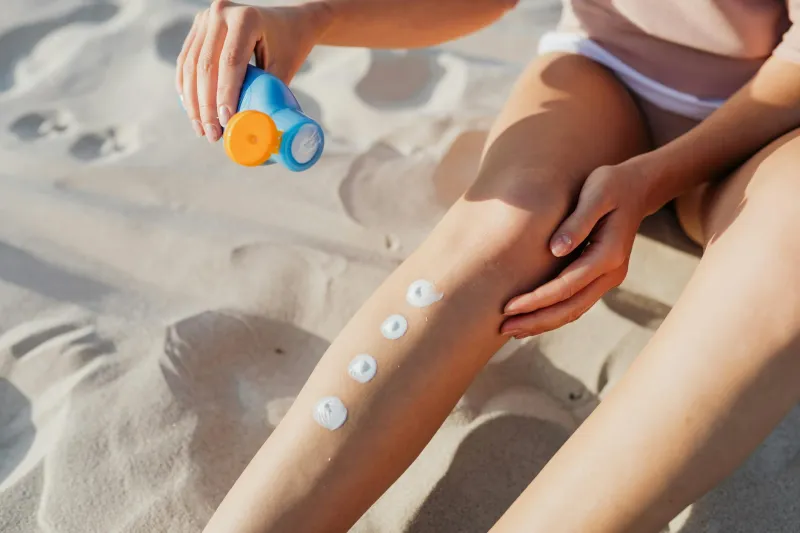
While Americans obsess over expiration dates, they're systematically under-applying sunscreen in ways that make SPF ratings meaningless. The SPF testing that determines those numbers on the bottle assumes you're using about one ounce — roughly a shot glass worth — for your entire body.
Most people use about one-fourth that amount, which doesn't just reduce protection proportionally. The math is worse than that: using half the recommended amount can cut your protection to roughly SPF 3, regardless of what the bottle claims.
"I see patients all the time who swear they used SPF 50 but still got burned," says Dr. Nazarian. "When we talk through how they applied it, they used maybe a quarter of what they needed."
The Reapplication Reality Gap
Even perfect application becomes inadequate within hours. Sunscreen protection degrades from sweat, water, rubbing against clothing, and simple time. The standard recommendation is reapplication every two hours, but most beachgoers apply once in the morning and consider themselves protected all day.
This pattern explains why people using fresh, high-SPF sunscreen still end up with painful burns. The product worked exactly as designed for the first few hours, then gradually lost effectiveness while the user assumed they remained protected.
Research shows that even "waterproof" sunscreens lose significant protection after 40-80 minutes of swimming or sweating. Yet many people interpret these labels as permission to skip reapplication entirely.
When Sunscreen Actually Goes Bad
Sunscreen does eventually degrade, but the warning signs aren't subtle. Products that have truly gone bad develop obvious changes: separation of ingredients, changes in color or texture, unusual odors, or visible clumping.
Heat accelerates this process dramatically. Sunscreen left in hot cars, beach bags sitting in direct sun, or stored in steamy bathrooms will degrade much faster than products kept in cool, stable environments.
"If your sunscreen looks and smells normal, it's probably fine even if it's technically expired," explains Dr. Adam Friedman, dermatology professor at George Washington University. "But if it's been sitting in your car all summer, I'd replace it regardless of the date."
 Photo: George Washington University, via farm1.staticflickr.com
The Application Technique Nobody Teaches
Beyond using enough product, application technique matters more than most people realize. Sunscreen needs to be applied to completely clean, dry skin and allowed to absorb for 15-30 minutes before sun exposure.
Applying sunscreen over moisturizer, makeup, or sweaty skin creates an uneven barrier that provides patchy protection. Similarly, rushing out into the sun immediately after application doesn't give the active ingredients time to form a proper protective layer.
Most people also miss spots entirely: ears, feet, lips, the back of the neck, and the area around sunglasses. These consistently under-protected areas account for a disproportionate number of skin cancers.
The SPF Number Game
The difference between SPF 30 and SPF 50 is much smaller than the numbers suggest. SPF 30 blocks about 97% of UV rays, while SPF 50 blocks about 98%. The marketing emphasis on higher numbers distracts from application and reapplication, which matter far more than the specific SPF rating.
"I'd rather see someone properly apply and reapply SPF 30 than use SPF 100 once and think they're invincible," says Dr. Friedman.
The Mineral vs. Chemical Confusion
Mineral sunscreens (zinc oxide and titanium dioxide) tend to maintain their effectiveness longer than chemical sunscreens, both in storage and on your skin. They work by physically blocking UV rays rather than absorbing them, which makes them more stable over time.
Chemical sunscreens break down more quickly, especially when exposed to the UV rays they're designed to absorb. This is why reapplication is particularly crucial with chemical formulations.
What Actually Matters
Instead of obsessing over expiration dates, focus on the factors that actually determine protection: using enough product, applying it properly, and reapplying frequently. A slightly expired sunscreen used correctly will protect you better than fresh product applied inadequately.
Keep your sunscreen in cool, stable storage when possible, but don't panic if it's a few months past its printed date. Check for obvious signs of degradation, and replace products that have been exposed to extreme heat.
Most importantly, remember that the best sunscreen is the one you'll actually use consistently and correctly — even if it's technically expired.