The 'Hidden Gem' Restaurant You Discovered Online Was Never Really Hidden
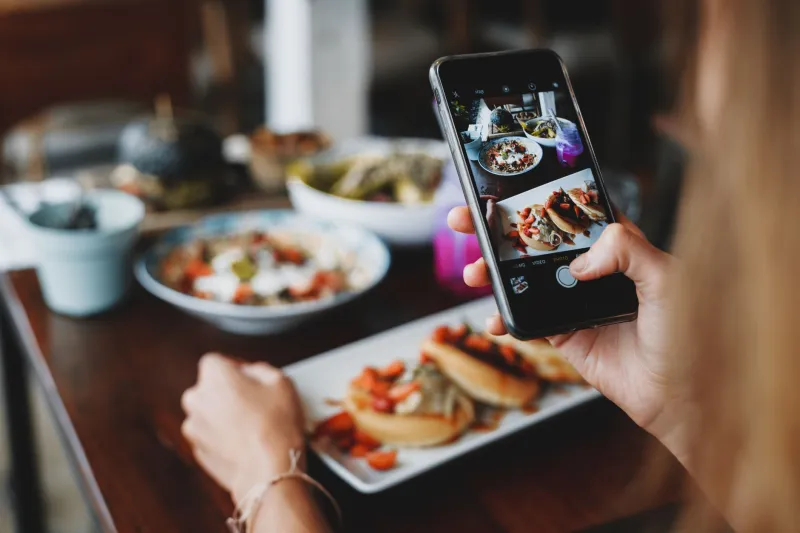
The List That Feels Like a Discovery
You've done your homework. Before flying to New Orleans, or Mexico City, or Porto, you spent an hour reading food blogs, cross-referencing Google Maps ratings, and saving Instagram posts tagged with the neighborhood name. You found a place — small, unassuming, rave reviews, someone called it a "hole in the wall the tourists haven't found yet." You feel good about this. You feel like you've done the work.
Here's the uncomfortable part: so did the forty other people sitting in that restaurant on the same Tuesday night, holding their phones, reading the same blog posts. The "hidden gem" is on four best-of lists, has 2,300 Google reviews, and gets mentioned in at least one travel piece per month. The locals who supposedly eat there? Many of them stopped coming when the wait times tripled.
This isn't a cynical take. It's just what happens when the infrastructure built to help travelers find authentic experiences becomes popular enough to change the experiences themselves.
How a Restaurant Goes from Local to Listed
The process is pretty predictable once you see it. A neighborhood spot gets a mention in a regional food publication or a well-followed food blogger's post. That mention drives a small traffic spike. The restaurant gets more Google reviews, which improves its local search ranking. A travel site looking for "best restaurants in [city]" scrapes those rankings and includes the place on a listicle. That listicle ranks on the first page of Google for "where to eat in [city]." More travelers find it. More reviews accumulate. The ranking improves further.
The restaurant, meanwhile, is now serving a customer base that's increasingly not from the neighborhood. It may adjust its menu, its hours, its pricing, or its English-language signage to accommodate the new reality. The thing that made it worth recommending in the first place — the unpretentious regulars, the handwritten daily specials, the owner who knows everyone — quietly shifts.
This isn't anyone's fault, exactly. It's just what algorithms do. They surface what's already popular, which makes it more popular, which surfaces it more.
The 'Authentic' Label Does a Lot of Work
The word "authentic" in food travel writing has been stretched so far it barely means anything specific anymore. It tends to signal not a chain and not catering to tourists — but those are descriptions of what a place isn't, not what it is. And once a restaurant becomes the destination for travelers seeking authenticity, it has, by definition, started catering to tourists.
This creates a strange loop. The most-recommended "local" spots are often the ones that have most successfully marketed themselves to non-locals. Meanwhile, the places where actual neighborhood residents eat lunch on a Wednesday — the Vietnamese sandwich counter with no Yelp page, the Dominican spot with a handwritten menu that changes daily, the Korean barbecue place with a parking lot full of local cars — don't show up in search results because they haven't been optimized for discovery.
They're not hidden. They're just not indexed.
Why the Algorithm Favors Certain Kinds of Restaurants
Review platforms and food apps aren't neutral mirrors of local eating culture. They reflect who's leaving reviews, which skews heavily toward English-speaking tourists, recent transplants, and food-engaged younger diners. A restaurant that serves an immigrant community, operates in a language other than English, or doesn't have a polished Instagram presence is structurally disadvantaged in these systems — not because the food is worse, but because the discovery infrastructure wasn't built with that restaurant in mind.
There's also a presentation factor. Restaurants that are photogenic, that have a clear narrative ("family recipe," "open since 1978," "grandmother's technique"), and that offer a legible cultural story tend to perform better in travel content. That's not a conspiracy — it's just what makes for a compelling blog post. But it means the places that get amplified are often the ones easiest to explain to an outsider, not necessarily the ones most deeply embedded in local food culture.
What Actually Works Better
None of this means you can't find genuinely good food while traveling. It just means the discovery method matters.
Asking hotel staff — not the concierge, but the housekeeping team or the front desk person who actually lives in the city — often yields better results than any app. Looking for restaurants where the signage isn't translated, where the menu has items you'd need to ask about, or where the surrounding block doesn't seem designed for foot traffic can get you closer to the real thing.
Farmer's markets, food halls that serve local workers rather than tourists, and lunch spots near office buildings or hospitals are often more representative of how a city actually eats than anything on a curated list. Lunch service specifically tends to draw a more local crowd than dinner, when tourists are more likely to be out.
And sometimes, the answer is accepting that the "authentic" experience you're looking for is something that exists for residents, not visitors — and that's okay. You can still eat very well without pretending you've discovered something no one else has found.
The Takeaway
The tools we use to find local restaurants are the same tools that make restaurants less local. The most-recommended "hidden gems" are hidden in name only — they're optimized for discovery, shaped by outside attention, and often most popular with people who flew in specifically to find them. That doesn't make the food bad. It just means the story you're telling yourself about the experience might need a small update.