That Universal Adapter You Bought at the Airport Might Be Solving the Wrong Problem Entirely
The $18 Solution That Might Be Missing the Point
You're packing for your first trip to Europe. Someone mentions you'll need an adapter. You find one at the airport gift shop — 'universal,' it says, covers 150 countries, comes with a little carrying case. You toss it in your bag and move on.
You have just solved one problem. You may or may not have solved the more important one.
The assumption most American travelers operate under is that a plug adapter is the thing standing between their devices and a foreign outlet. Plug fits, device works, done. But there's a second variable in international electricity that the adapter aisle rarely explains clearly — and depending on what you're plugging in, ignoring it can range from mildly inconvenient to genuinely dangerous.
Two Separate Problems Hiding Behind One Purchase
Electricity delivered through foreign outlets differs from American electricity in two distinct ways: plug shape and voltage.
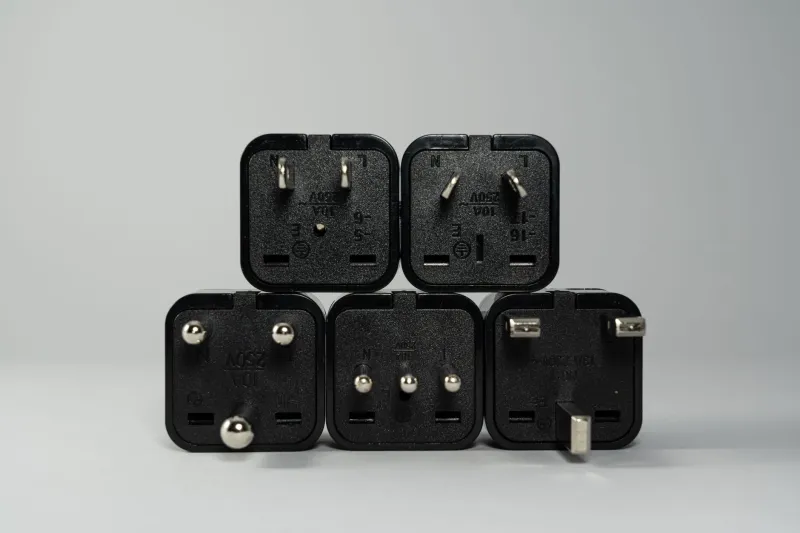
An adapter addresses plug shape. That's it. It's a physical interface — a piece of plastic and metal that lets your American plug fit into a European, British, or Australian outlet. It does not touch the electricity itself. It has no transformer inside. It changes nothing about what comes out of the wall.
Voltage is the other problem. The United States runs on 110–120 volts. Most of Europe, Asia, Africa, and South America runs on 220–240 volts — roughly twice as much electrical force. Plugging a device designed for 120 volts into a 240-volt outlet without any conversion is the electrical equivalent of running twice the pressure through a pipe built for half that load.
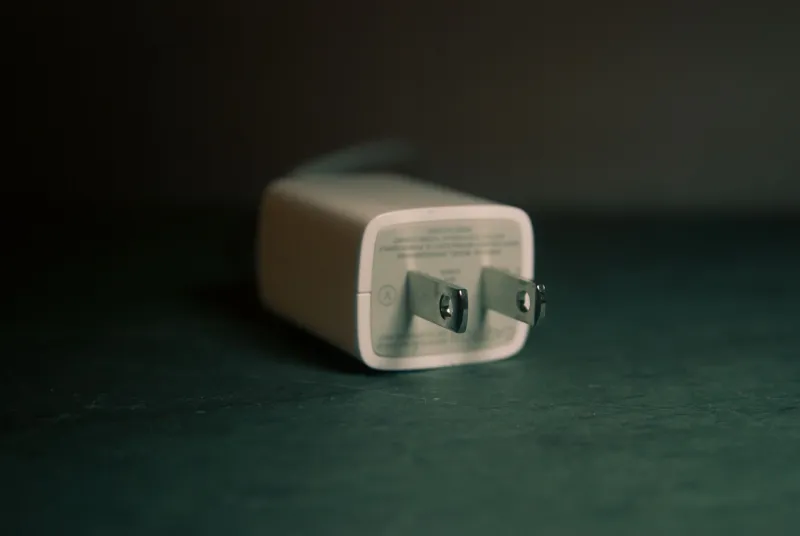
 Photo: United States, via static.vecteezy.com
The result can be a fried device. In some cases, it can be a safety hazard. And an adapter — however 'universal' the packaging claims it is — does nothing to prevent either outcome.
What a Converter Actually Does (And Why It's Different)
A voltage converter is a different device entirely. It actually modifies the electrical current — stepping down 240 volts to the 120 volts your device expects. It's heavier, typically more expensive, and does a job the adapter simply cannot.
For years, the standard travel advice was: adapter for the plug shape, converter for the voltage. That guidance still circulates widely online and in travel forums. It's technically accurate. It's also increasingly outdated for most modern consumer electronics — which is where the story gets more interesting.
The Part Most Travel Advice Forgets to Mention
Here's what the adapter-aisle display doesn't tell you: the majority of electronics manufactured in the last fifteen to twenty years are already designed to handle both voltages automatically.
Look at the fine print on your laptop's power brick. Somewhere on that rectangular block, usually in small text, you'll see a voltage rating that reads something like 100–240V. That means the device's power supply is built to accept anything in that range — from Japan's 100 volts to Europe's 240 — and regulate it internally. No converter needed. The adapter alone is sufficient because the device itself handles the voltage difference.
The same is true for most smartphone chargers, camera chargers, tablets, and many other modern devices. Manufacturers build dual-voltage capability into consumer electronics because they're designing products for a global market.
So for the majority of what modern travelers actually pack, the universal adapter is the right and complete solution. The converter concern is real — but it applies most directly to older devices, high-wattage appliances, and items that draw a lot of power continuously: hair dryers, curling irons, electric shavers, older power tools.
How to Check Before You Pack
This is genuinely easy to verify before your trip. Look at the power supply label on every device you're bringing. You're looking for the input voltage rating:
- 100–240V means dual voltage. An adapter is all you need.
- 120V only means single voltage. You either need a converter, or you need to leave that device home and buy or rent a compatible version at your destination.
For high-wattage appliances like hair dryers, the simplest solution is usually to buy or borrow a dual-voltage version designed for travel, rather than hauling a heavy converter across an ocean. Most travel-size hair dryers now include a voltage switch for exactly this reason.
Why the Confusion Keeps Selling Adapters
The adapter industry has a financial incentive to keep voltage anxiety alive. 'Universal adapter' packaging frequently implies comprehensive protection — the word 'universal' doing a lot of heavy lifting. Displays near airport security, where travelers are already stressed and in a purchasing mindset, aren't the place for nuanced electrical engineering explanations.
Travel bloggers and packing guides often repeat the adapter-plus-converter advice without checking whether it's still relevant for the devices most people actually travel with today. The advice isn't wrong in principle. It's just not calibrated to 2024 consumer electronics.
The result is a widespread belief that international electricity is a complex, dangerous puzzle requiring specialized equipment — when the reality for most travelers with modern devices is considerably simpler.
The Takeaway
Before your next international trip, check the voltage rating on everything you're packing. If your devices say 100–240V, a basic plug adapter is genuinely all you need — and you don't have to pay airport gift shop prices for it. If you're bringing older appliances or anything rated for 120V only, then yes, a converter matters. The distinction is real. It's just that most travelers are already better prepared than they realize — they just don't know it yet because nobody in the adapter aisle told them.